The Complete Guide to Modern Managerial Testing and Assessment
- 12 December 2025

What These Evaluations Are and Why They Matter
Organizations thrive when leaders align strategy, people, and execution with clarity and empathy. Well-constructed evaluations help reveal how supervisors coach, decide, communicate, and adapt under pressure, making intangible leadership behaviors measurable. Rather than guessing about capability, teams gain shared evidence that fuels targeted development, equitable promotions, and stronger succession pipelines. When these instruments are applied consistently, they illuminate patterns across departments and offer a durable baseline for improvement over time.
In practice, a test for management equips companies with a common language for leadership potential while lowering bias and enhancing transparency. High-quality tools examine competencies such as decision-making, delegation, conflict navigation, stakeholder influence, and strategic thinking. They also explain how context, remote work, rapid scaling, regulatory demands, shapes the behaviors that actually drive outcomes. The most actionable programs combine scenario-based prompts, behavioral ratings, and reflective exercises so candidates demonstrate what they do, not just what they claim. With clear role profiles, HR can map results to job families and align learning resources, coaching, and stretch projects with measurable goals. The result is a feedback-rich culture that systematically upgrades leadership capacity.
- Clarifies expectations with observable behaviors and ratings.
- Reveals readiness gaps and hidden strengths across teams.
- Reduces bias through consistent, job-related criteria.
- Improves retention by matching development to career paths.
- Accelerates onboarding for first-time leaders and new managers.
Business Value: From Signal to Strategy
A rigorous approach to measurement creates momentum that compounds across quarters. When leaders receive precise feedback, they calibrate faster, reduce churn, and improve execution quality. Finance benefits from fewer mis-hires, and operations gains from role clarity and sharper decision rights. Talent teams also see stronger internal mobility because capabilities are visible, validated, and comparable across cohorts.
Beyond individual growth, a management assessment test helps expose systemic patterns that inform workforce planning. If analysis shows weak delegation in mid-level roles, you can adjust training, simplify spans of control, and update interview rubrics to select for the behaviors you need. Legal and compliance leaders value the auditable nature of structured assessments, which tie decisions to job-relevant evidence. For culture, the payoff is trust: employees understand how advancement decisions are made, while managers receive concrete steps to improve. Executive teams can then link assessment data to performance metrics, customer NPS, cycle time, quality, and safety, to show that leadership behaviors are not “soft,” but directly predictive of hard outcomes.
- Reduce hiring risk through validated, job-related measures.
- Target training dollars to the gaps that matter most.
- Enable fair promotions via standardized evidence.
- Align leadership capability with strategic priorities.
What to Measure and How: Constructs, Scenarios, and Score Use
Effective instruments blend psychometrics with realistic work samples. Competency clusters often include strategic judgment, communication clarity, team enablement, execution discipline, and learning agility. Scenario-driven vignettes can simulate ambiguous trade-offs, budget cuts, stakeholder conflicts, cross-functional escalations, so candidates must choose actions and explain rationale. Behavioral ratings from peers or supervisors add 360-degree perspective, and reflective prompts capture metacognition: how a leader learns from mistakes and reframes assumptions. Reliability and validity matter; look for clear construct definitions, norm groups, and transparent scoring rubrics.
For style and preference insights, a management style test can complement performance-oriented simulations by surfacing tendencies under stress and change. Combining these sources yields a fuller picture: what someone is likely to do and how they may do it when the stakes are high. To help you compare common options at a glance, the matrix below summarizes typical methods, what they reveal, and when to use each. Use it as a springboard to design a modular approach that suits your roles, risk profile, and culture.
| Method | Reveals | Sample Prompt | Best Use |
|---|---|---|---|
| Situational Judgment | Applied decision-making in realistic scenarios | You must cut 10% of spend without harming delivery, rank actions | Hiring and promotion for role-fit under ambiguity |
| Work Sample Simulation | Hands-on execution and prioritization | Plan a two-week sprint with limited resources | Assessing readiness for near-term responsibilities |
| 360 Behavioral Ratings | Observed behaviors across stakeholders | Peers rate clarity, follow-through, coaching | Development planning and culture calibration |
| Style/Preference Inventory | Motivations, influence patterns, stress responses | Choose statements that feel most like you | Coaching and team composition insights |
- Ensure each method maps to a defined competency.
- Blend sources to reduce single-method bias.
- Use clear rubrics and anchor examples to calibrate raters.
- Document validity evidence and scoring transparency.
Selecting or Designing the Right Instrument
Start with the job, not the tool. Write behavior-based success profiles that distinguish threshold competencies from differentiators. Define what “good” looks like at each career stage, then pick measures that fairly elicit those behaviors. Consider time-to-administer, candidate experience, language accessibility, and data privacy. Pilot with a small, diverse cohort, compute reliability, and compare results with performance indicators to verify predictive value. When building in-house, partner with an I/O psychologist to ensure rigor and to avoid construct contamination or adverse impact.
If you need an off-the-shelf option, a management style assessment test can be layered with situational exercises to balance self-insight and job realism. Procurement should evaluate vendors on validity documentation, reporting clarity, integration options, and support for localization. Ask for sample score reports and reviewer training materials, and confirm you can export raw data for internal analytics. Finally, design a candidate-friendly experience: give clear instructions, set expectations for time commitment, and provide timely, respectful feedback with actionable next steps.
- Anchor design to role profiles and business outcomes.
- Pilot and iterate with data, not anecdotes.
- Balance measurement depth with candidate experience.
- Ensure accessibility and fairness across populations.
From Scores to Action: Interpreting, Debriefing, and Development
Scores alone do not change behavior; insight plus practice does. Translate results into a short list of high-leverage behaviors and build a 60–90 day plan that includes rehearsal, feedback, and reflection. Connect insights to daily rituals, one-to-ones, stand-ups, sprint reviews, so application becomes habitual. Managers should co-create growth goals with their leaders, schedule follow-ups, and celebrate observable progress. Measurement should continue with lightweight pulses to maintain accountability and to adjust the plan as context shifts.
When deeper root-cause analysis is needed, a management style diagnostic test can reveal friction between intent and impact, especially under stress. Use structured debriefs that pair quantitative results with examples from the person’s work to ground feedback in reality. Coaching should focus on replacement behaviors: what to do instead, not just what to stop. For teams, aggregate dashboards help detect systemic issues, like decision latency or unclear ownership, so interventions can target process design, not just individuals. Over time, link leader behavior improvements to business KPIs to demonstrate ROI.
- Turn insights into 1–3 measurable behavior goals.
- Practice in the flow of work, not only in workshops.
- Re-measure at regular intervals to reinforce progress.
- Connect growth to customer, quality, and cost metrics.
Rollout, Ethics, and Change Management
Introducing new assessments is a change initiative, and it must be treated as such. Communicate the why, the how, and the safeguards before the first invitation is sent. Provide training for raters and reviewers to ensure consistent application, and publish a clear policy on data retention, access, and candidate rights. Accessibility and localization are essential; ensure inclusive language, screen-reader compatibility, and culturally neutral scenarios. Involve ERGs or DEI councils to help spot blind spots early and to build trust.
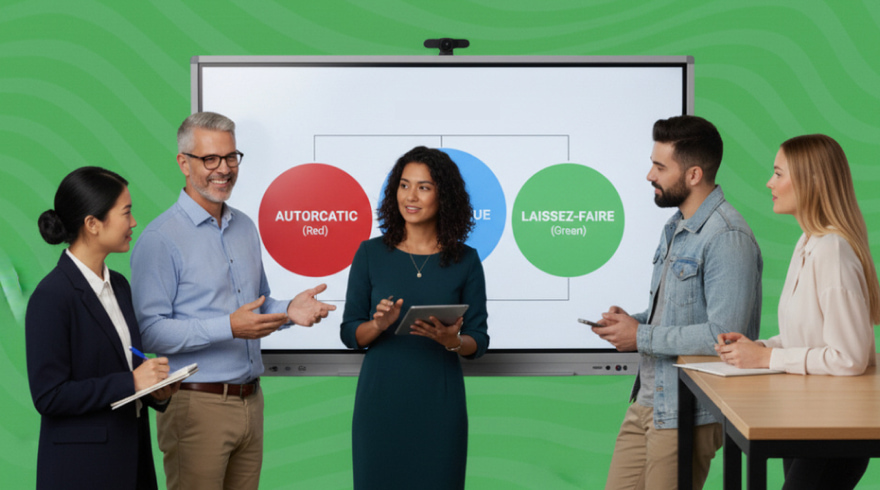
When evaluating breadth versus depth, a management styles test may help visualize how a leadership team distributes across archetypes, which informs hiring and team design. However, never reduce people to labels; pair typologies with behavioral evidence and context. Make feedback a gift by empowering participants with action guides, curated learning paths, and peer practice circles. Finally, measure the rollout itself: participation, completion times, perceived fairness, and utility ratings. Use that data to refine content, timing, and communications, and to confirm that the program is improving decisions without creating administrative drag.
- Share purpose, process, and privacy upfront.
- Train reviewers and calibrate with anchored examples.
- Design for inclusivity and cultural neutrality.
- Evaluate and adapt the program using participant feedback.
Real-World Scenarios, Tools, and Budget-Friendly Options
Consider three common challenges: promoting a star IC to their first leadership role, turning around a team after a merger, and preparing successors for a departing director. Each scenario benefits from a blended approach that combines simulations, behavioral feedback, and targeted coaching. For emerging leaders, short work samples coupled with structured debriefs build confidence and momentum. In turnarounds, scenario-based prompts reveal how someone balances empathy with accountability under time pressure. For succession, multi-method evidence helps decide what to develop in place versus what to hire from the outside.
For smaller budgets, some platforms include a management style test free option that can provide initial insight before investing in a fuller suite. Cost efficiency grows when you standardize rubrics, automate scheduling, and reuse scenarios tailored to role families. You can phase deployment: start with high-impact roles, harvest learnings, then scale with stronger content and better automation. As you mature, connect your talent marketplace to assessment data, allowing employees to discover growth opportunities and mentors aligned to their development goals.
- Pilot in a high-impact use case, then scale iteratively.
- Automate logistics to keep the experience lightweight.
- Repurpose scenarios across related roles to reduce cost.
- Link assessment outcomes to internal mobility pathways.
FAQ: Common Questions About Managerial Testing
How do I know an instrument is reliable and valid?
Ask vendors for technical manuals that include reliability coefficients, construct definitions, and criterion-related validity studies. Review norm groups to ensure they reflect your workforce, and request sample items and scoring rubrics. Internally, pilot and correlate results with performance outcomes to confirm predictive power in your context.
Will candidates find the process fair and not overly time-consuming?
Fairness grows when instructions are clear, scenarios are job-relevant, and feedback is timely. Keep administration time proportional to the decision’s stakes, and provide accommodations where needed. Communicate how results will be used and who can access them to build trust and reduce anxiety.
How should we debrief results with participants?
Use a structured conversation: summarize key strengths, identify two behavior targets, and agree on practice opportunities in the next 60–90 days. Provide resources like job aids, micro-courses, and coaching prompts. Schedule follow-ups to review progress, and reinforce wins with specific, observable examples.
Can we try assessments before a large rollout?
Many providers offer pilots with administrative analytics and sample reporting so you can assess fit. In some cases, platforms even include management style tests free trials for initial exploration before purchasing enterprise features. Start with a focused use case, measure impact, and adjust content and logistics based on participant feedback.
How do we prevent labels from pigeonholing people?
Pair style insights with behavior evidence and current role demands. Emphasize preferences as tendencies, not fixed traits, and prioritize coaching on replacement behaviors in real work situations. Use aggregated data for team design and development planning, not for narrow gatekeeping decisions.
Latest News
-
![Management Style Quiz: the Complete Guide to Leadership Style Assessments]()
- 15 December, 2025
-
![Management Assessment: A Complete Guide to Benefiting from Assessments]()
- 11 December, 2025
-
![Mastering Leadership Styles: A Guide to Styles, Benefits, and Practical Use]()
- 10 December, 2025